
There are many different reasons why people set up voluntary and community groups. However, they are usually set up because someone or a small group of people see that there is a need for a particular activity or service in their area.
Whatever kind of group you would like to start there are some things you need to consider. We have provided guidance and resources to help you through this process.
Below are a few questions to think about when forming a new community group:
- What type of group are you and who do you want to help? For example, are you bringing together people with similar problems to help themselves? Is it a group to improve the local environment or provide activities for others
- What sort of need is there for your group? How do you know it is needed? Who needs it? What is the level of need? What difference do you want your group to make?
- Are there any existing groups in your area offering something similar or working with the same beneficiary group? Could you work with them rather than start your group?
- Who is involved with your group and what sorts of relevant skills and experience do you have?
Online Training

Free On-demand training on setting up a community group
Register to watch Support Cambridgeshire’s free On-demand training on setting up a community group

You may also like...

Building meaningful business partnerships – Case study: Red Hen Project
Jennifer Rutter from the Red Hen Project, a grassroots charity in Cambridge that provides support to children aged 0-12 and their families, spoke to a member of...


Building the right fit: How businesses and charities can create meaningful partnerships
One of our development team spoke to Heidi Mulvey, Head of Community Engagement at Cambridge University Press & Assessment, about her colleagues’ experience of...

SORP 2026: Demonstrating impact
By Support Cambridgeshire's Development Team As a result of the Charity Statement of Recommended Practice (SORP 26) all charities reporting to the Charity Commission...

The sandwich question: when controls become bottlenecks
Most small organisations have their own version of what I’ve come to think of as 'the sandwich question.' It usually sounds something like: “Can we order lunch...
Cross my palm with silver: Part 2
Views on some of the national drivers that charities in Cambridgeshire need to think about These are some of the areas charities will need to consider as they...
Lights, Camera, Impact: How charities can use video and storytelling to connect and inspire
In today’s fast-paced digital landscape, video stands out as one of the most effective tools available to charities and voluntary groups. It is engaging, accessible,...
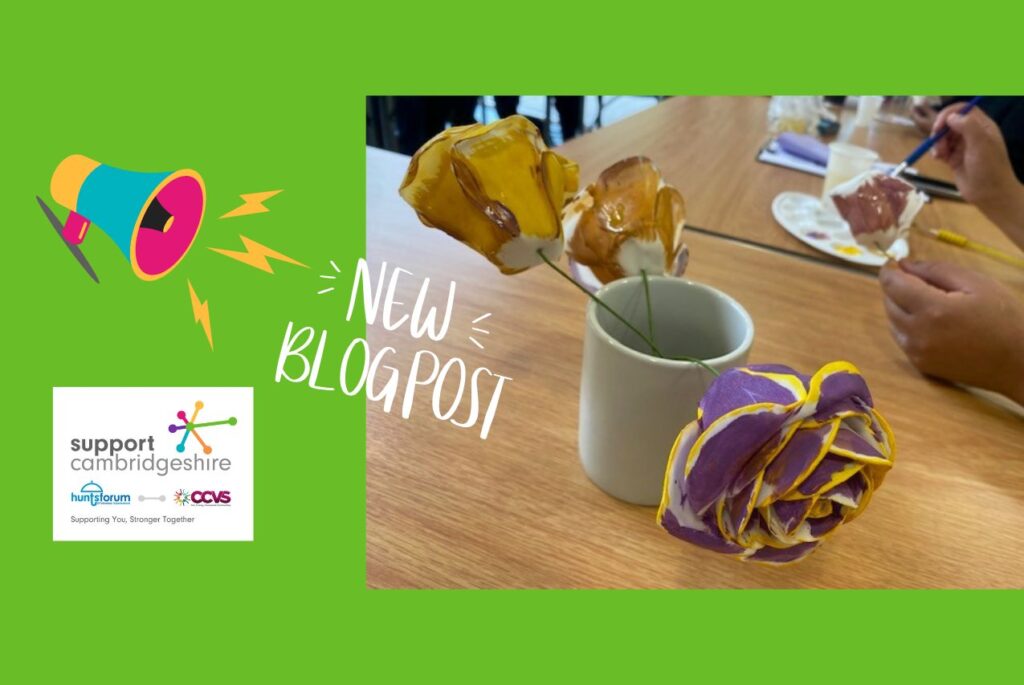
Case study: Sabr Arts and Crafts – creating a support network for a grassroots initiative
Sabr Arts and Crafts is a grassroots initiative to create a welcoming space that addresses mental health and well-being, particularly for women from the South Asian...

Cambridgeshire and Peterborough Combined Authority (CPCA) Learning and Skills Fund project
The Cambridgeshire and Peterborough Combined Authority (CPCA) Learning and Skills team has relaunched its funding programme for voluntary sector organisations. The fund...