Menu
Menu
A personal introduction to Project Management
Author: Chris Trevorrow, Senior Development Officer
Published on: January 28, 2025

My first role on leaving university was in project management; to begin with it involved a confusing array of tasks, a seemingly epic cast of people and spreadsheets I couldn’t make any sense of. Eventually though I learned how to take a brief and work with others to develop clear, measurable goals, budgets and timeframes. I learned how to motivate, negotiate and communicate and most of all listen to those with expertise I lacked. I even learned how to create a spreadsheet.
At its core, project management is about getting things done. It’s the process of planning, organising, and overseeing tasks to achieve specific goals within a set timeframe and budget.
Key Elements of Project Management
- Setting Objectives: Unless you happen to be an expert on all elements of your proposed project you will need to do your research and involve others with the required expertise. Every project needs clear goals, and you need to define what success looks like to your stakeholders. These goals need to be Specific, Measurable, Achievable, Relevant, and Time-bound also known as SMART so that they can be tracked and measured.
- Planning: This involves breaking down the project into smaller tasks, setting deadlines, and allocating resources. Think of it as creating a roadmap to guide you towards your goal.
- Organising: Once you have a plan, you will probably need other people to help you deliver the project. You might be asked to assemble a team, or you might inherit one. Everyone needs to understand their role and what they’re responsible for and how their work contributes to the overall project. You are unlikely to be an expert on all elements of the project so be prepared to ask lots of questions.
- Executing: This is where the actual work happens. Your team carries out the tasks according to the plan, and you monitor their progress to ensure everything stays on track.
- Monitor: As the project progresses, you need to keep an eye on things to make sure they’re going according to plan. If issues arise, you’ll need to address them promptly to prevent delays or cost overruns.
- Review: Once the project is complete, it’s time to tie up loose ends, evaluate the results, and celebrate your success. This phase ensures that all deliverables have been met and that any remaining tasks are taken care of.
Project Management Challenges
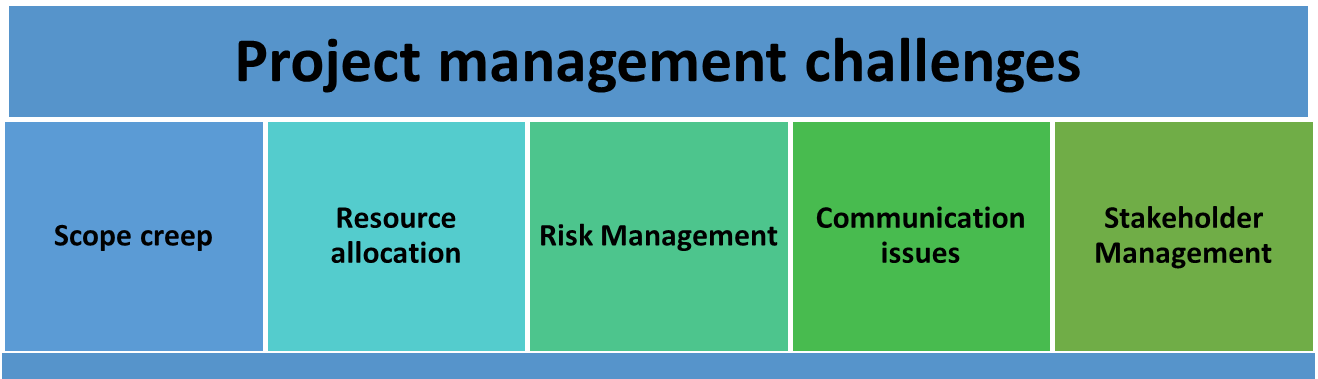
While project management can be rewarding, it also comes with its challenges. Here are some common ones and how to overcome them:
- Scope Creep: This occurs when the project’s scope expands beyond its original boundaries, leading to delays and budget overruns. To prevent scope creep, clearly define project objectives, communicate them to stakeholders and monitor their progress.
- Resource Allocation: Managing resources like time, money, and personnel can be tricky. Prioritise tasks based on their importance and allocate resources accordingly.
- Risk Management: Unexpected events can derail even the best-laid plans. Identify potential risks early on and have contingency plans in place to minimise their impact.
- Communication Issues: Poor communication can lead to misunderstandings and delays. Establish clear channels of communication and encourage open dialogue among team members. Ensure you consult those delivering the project when developing your schedule.
- Stakeholder Management: Projects often involve multiple stakeholders with competing interests. Identify key stakeholders and engage with them throughout the project to ensure they give the information you need to know what success looks like for them.
Project Management Tools and Techniques
Project management involves using various tools and techniques to streamline processes and improve efficiency. Here are some common ones that are free to use:
- Project proposal form this helps you work through the key elements of your project, you can find a form template here.
- Plan on a page shows the key tasks and milestones. It is a helpful communication tool to share with stakeholders. It does not replace a detailed plan. There is no single right way to present this but the link is associated with a You Tube video showing how to create a plan using power point.
- Gantt Charts: These visual timelines show tasks and their dependencies, helping you schedule and track progress.
- Work Breakdown Structure (WBS): This breaks down the project into smaller, more manageable tasks, making it easier to assign responsibilities and estimate resources.
- Critical Path Method (CPM): This identifies the longest sequence of tasks in a project, helping you prioritise and allocate resources effectively.
- Risk Management: This involves identifying potential risks and developing strategies to mitigate them, ensuring smooth project execution.
- Communication Plans: Clear communication is crucial for project success. A communication plan outlines who needs to be informed about what and when, ensuring everyone stays on the same page.
In summary
Project management delivers:
- Improved Efficiency: By having a clear plan in place, you can streamline processes and avoid unnecessary delays, leading to greater efficiency.
- Cost Savings: Effective project management helps you stay within budget by identifying and addressing potential cost overruns early on.
- Quality Assurance: By monitoring progress and addressing issues promptly, you can ensure that deliverables meet the required standards.
- Stakeholder Satisfaction: By involving stakeholders throughout the project and delivering results on time and within budget, you can build trust and satisfaction.
- Personal Development: Managing a project provides valuable experience and skills that can enhance your career prospects. I used my experience of project management as a springboard into a varied and fulfilling career.
‘To the optimist, the glass is half full. To the pessimist, the glass is half empty. To the project manager, the glass is twice as big as it needs to be.’ Source: The Project Agency Aaron Rosenhead.